Understanding the Social Acceptability of BECCS Beyond NIMBY
Bioenergy with Carbon Capture and Storage (BECCS) is a relatively recent mitigation technology designed to achieve negative emissions by capturing CO2 from biomass combustion and permanently storing it in geological formations. While its role in climate scenarios is increasingly prominent, its real-world implementation faces significant hurdles similar to other low-carbon technologies, including potential lack of social support and political acceptability.
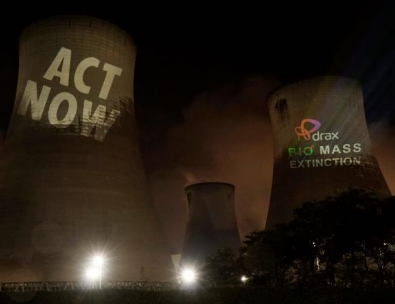
In this context, Florian Auclair’s thesis investigates the complex socio-political dynamics of this emerging sector. He developed an innovative analytical framework that links the immediate acceptability of a project to its broader regional, national, and political history. By applying this framework to two distinct case studies—the Drax power station in England and the KVV8 plant in Sweden—Florian compared the deployment of BECCS across different governance and industrial settings to draw critical conclusions on the factors that drive or inhibit social acceptance.
In the section below, Pauline Ascon provides a summary of the first chapter of Florian’s thesis, highlighting key findings.
State of the Art – ‘Acceptability’ in the literature
The deployment of low-carbon technologies such as NETs is often met with a paradox: while globally recognized as necessary for the climate, they frequently face fierce local opposition. To overcome the simple binary of support and rejection, and to better capture the mechanisms hidden behind the notion of Social Acceptability, Florian’s research work began with a thorough review of the definitions of the concept of “Acceptability” in the literature.
The Evolution of Social Acceptability: From NIMBY to Political Battle
A bibliometric review of over 8,500 documents (Scopus, 1990–2021) showed that social science research on this topic has undergone three major shifts (Batel, 2020).
Before 2000, Social Acceptability was defined through the Normative Approach: research focused on local "nuisances" and the NIMBY concept (Burningham, 2000). Developers assumed opposition arose from ignorance and that "educating" the public would lead to support. However, studies show that more informed citizens are often the most skeptical (Michaud, Carlisle and Smith, 2008).
After 2000, efforts to define the concept took a Multi-Dimensional Turn: scholars moved beyond local selfishness to consider procedural, distributive, and environmental justice. Acceptability became a matter of trust between stakeholders and project legitimacy (Bourdin, Jeanne and Raulin, 2020).
Finally, after 2010, scholars adopted a Deconstructivist Approach, and Acceptability has been viewed as a political battle over competing ideologies and power dynamics in the energy transition (Fournis and Fortin, 2015).
From "Acceptability" to "Acceptabilities"
The analysis carried out in this first chapter concludes that we should not speak of a single "Social Acceptability," but rather of multiple acceptabilities that can be distributed between two poles: the Pole of Principles, where a debate occurs on the very values and logic of the technology, and the Pole of Local Territorialization, which focuses on the specific community where the project is implemented, weighing local benefits against local risks. Additional acceptabilities exist between the two defined poles, such as the acceptability of the decision-makers involved in public policies. This framework is inspired by Boltanski and Thévenot’s concept of ‘cities,’ a tool for understanding how actions are justified in a world where multiple values coexist (Thévenot and Boltanski, 2022). It is essential to define several acceptabilities to explain the interests, roles, and challenges of the various stakeholders involved.
Applying the Framework: The Case of BECCS and CCS
The framework was then applied to Bioenergy with Carbon Capture and Storage (BECCS).
BECCS is a "composite problem" that inherits the challenges of its predecessors. Carbon Capture and Storage (CCS) historically faced opposition due to fears of leakage and drops in land value. Developers responded by moving projects to unpopulated areas, essentially attempting to bypass the local Acceptability pole.
Moreover, BECCS introduces new controversies regarding biomass. While the industry promotes it as a "green" necessity, critics point to the "carbon accounting" trap, in which harvesting forests might release more CO2 than the technology actually stores (see the Pole of Principles defined in the previous section). Unlike fossil-fuel CCS, BECCS is marketed as a "Negative Emission Technology" aimed at achieving Ecological Modernization. This can also be seen as a "disinhibition" strategy (Fressoz, 2014) intended to make industrial expansion appear morally acceptable.
Research shows that the "success" of BECCS projects is highly context-dependent (see the Pole of Local Territorialization defined in the previous section). For instance, in Germany, two similar projects had vastly different outcomes depending on whether the developer was a public university or a foreign private firm (Dütschke et al., 2016).
Finally, between these poles, public policy instruments, such as taxes or subsidies, play a decisive role, although their social reception varies depending on the type (Bellamy, Lezaun and Palmer, 2019).
Conclusion: A Question of Context
Thanks to the framework he created, Florian was able to capture the political and technical considerations at the local, national, and global levels that are encompassed in the notion of Social Acceptability.
Building on this framework, he examines specific BECCS case studies to show how these theoretical "acceptabilities" manifest in practice. By analyzing real-world projects, the research moves beyond abstract principles to explore tangible political and technical tensions across local, national, and global scales. This analysis leads to the central research question of the thesis: "How does the socio-political context of a specific territory shape the different phenomena of 'acceptabilities' for BECCS technology?"
To see the complete research and all the work Florian conducted, please follow this link.
Bibliography
Batel, S. (2020) « Research on the social acceptance of renewable energy technologies: Past, present and future », Energy Research & Social Science, 68, p. 101544. Disponible sur: https://doi.org/10.1016/j.erss.2020.101544.
Bellamy, R., Lezaun, J. et Palmer, J. (2019) « Perceptions of bioenergy with carbon capture and storage in different policy scenarios », Nature Communications, 10(1), p. 743. Disponible sur: https://doi.org/10.1038/s41467-019-08592-5.
Bourdin, S., Jeanne, P. et Raulin, F. (2020) « Dossier « L’économie circulaire : modes de gouvernance et développement territorial » – « La méthanisation, oui, mais pas chez moi ! » Une analyse du discours des acteurs dans la presse quotidienne régionale », Natures Sciences Sociétés, 28(2), p. 145‑158. Disponible sur: https://doi.org/10.1051/nss/2020030.
Burningham, K. (2000) « Using the Language of NIMBY: A topic for research, not an activity for researchers », Local Environment, 5(1), p. 55‑67. Disponible sur: https://doi.org/10.1080/135498300113264.
Dütschke, E. et al. (2016) « Differences in the public perception of CCS in Germany depending on CO2 source, transport option and storage location », International Journal of Greenhouse Gas Control, 53, p. 149‑159. Disponible sur: https://doi.org/10.1016/j.ijggc.2016.07.043.
Fournis, Y. et Fortin, M.-J. (2015) « Mettre à l’épreuve l’acceptabilité sociale (partie 1) », VertigO, 15‑3. Disponible sur: https://doi.org/10.4000/vertigo.16682.
Fressoz, J.-B. (2014) « Biopouvoir et désinhibitions modernes : la fabrication du consentement technologique au tournant des XVIII e et XIX e siècles »:, Revue d’histoire moderne & contemporaine, n° 60-4/4 bis(4), p. 122‑138. Disponible sur: https://doi.org/10.3917/rhmc.604.0122.
Michaud, K., Carlisle, J.E. et Smith, E.R.A.N. (2008) « Nimbyism vs. environmentalism in attitudes toward energy development », Environmental Politics, 17(1), p. 20‑39. Disponible sur: https://doi.org/10.1080/09644010701811459.
Thévenot, L. et Boltanski, L. (2022) De la justification. Les économies de la grandeur. Gallimard. Disponible sur: https://doi.org/10.3917/gall.theve.2022.01.